Posts

Ready, Get Set, Write

Writing short pieces - say up to around 5000 words - is fairly straightforward. You can, in most cases, just start writing and keep going until you've said everything you wanted and then go back and edit for sense. If you've missed something out, you can slot it into the text. Or, if you've overdone a section - or the writing is bad or unnecesary - you have good friend in the delete button. Writing longer pieces is different. Having a lot to say will take time and effort - the two things a writer cannot afford to waste. So what's the best way to approach writing longer works? It's all about preparation. It's about knowing where you're going and having some idea of your destination. Some writers say they can't write using a plan - or even knowing what the ending is. They cite Stephen King - who says he doesn't know what the endings of his stories are going to be when he starts out. It's deliberate he says because he wants to write his ch...

Writing and New Year Beginnings

Image
I don't know what happens in your part of the world but here, in Australia, January is to be dreaded and feared - it is a time of drought (intellectually and literally) and of waste (creatively and literally). But what brings about this most tragic and frustrating of times? Gah! The school holidays. For reasons unclear and lost, society has deemed that children cannot concentrate for long periods. They apparently have difficulty on a day to day basis, consequently their working days must be kept inconveniently short. But this inability to stay focused apparently also dictates that they get 12 to 16 weeks of holidays a year - much to the chagrin the parents that end up having to look after them. Far be it from me to suggest that this situation is perpetuated and encouraged by teachers - who just coincidentally benefit from these arrangements - when the rest of us are lucky to get a measly two weeks in the sun. I wouldn't be so mean to suggest that teachers as a race wou...

Writing Resolutions That Stick

Image
Probably the most consistent problem I'm asked to help with is sustaining the momentum required to finish writing projects. Writing a book is apparently the secret wish of 90% of the population - as though writing a book somehow validates us as humans - and perhaps makes us a little more immortal. But only around 5% of people will ever rise to the challenge - and even they will falter more times than not. Of these would be writers, less than one percent will ever finish their books - and just to be depressing now, only a handful of that one percent will ever be published. Faced with t his punishing reality, how do you find the strength to carry on writing? Let me answer by telling you a story. Once, a very long time ago, I asked a practising motivational guru how I could become rich. I say it was a long time ago because in those days I was very cynical and I asked the question as more of a challenge than a query. The guru gave me a quick answer: "Want to be ric...

How to Achieve Writing Success

Image
Here's the cute lie that most people  believe: Writing is more than a skill, a pastime or a way of making a living. It is a vocation - like being a nurse or missionary. In order to commit yourself, and impress those that would read your work, you have to want to do it for nothing. Indeed this is how many of us become writers - it's something we feel compelled to do, whether asked to, required to or not! Certainly I've noticed that when you first start dealing with publishers, your enthusiasm, commitment and talent are of primary concern. Any talk of money too early in the process will see you ostracized very quickly. You're supposed to want to write for yourself - for Art's sake - first. I guess it's about trust. The people that would help us get our work seen - in other words, published - need to be sure that our motives are sincere. That we write for some purpose other than just to make money. Tosh! Robyn and I have discussed this aspect of the...

Murder Your Darlings

Image
After a lifetime online I've just registered my site with Google - about time I guess. But that's not it... I've just discovered that my all time favorite article (according to Google) is the one below. To be honest I'd forgotten I'd written it - but it even gets a mention in Wikipedia, it's so famous! Well I never. Anyway, here it is, resurrected: Murder Your Darlings “Murder your darlings” is a phrase said to have been coined by F Scott Fitzgerald. He was referring to what you might call your “best bits.” He believed that these are the very “bits” you should always edit out of your work. As Elmore Leonard once said, “If I come across anything in my work that smacks of ‘good writing,’ I immediately strike it out.” The theory is that writing you’re particularly proud of is probably self-indulgent and will stand out. You might think this is good. Wrong. You will most likely break the “fictive dream.” (This is the state of consciousness reached b...

The Hydra Syndrome

Image
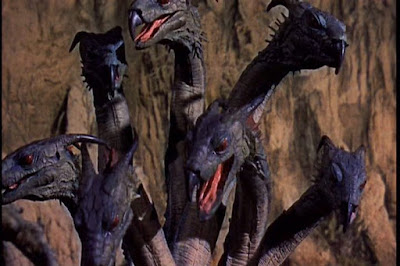
The following article seemed to hit home with a lot of writers when I sent it to my current subscribers. It was originally called "The Medusa Syndrome" but many learned scholars and professors (yes - they get my newsletters too!) pointed out I'd made a slight 'myth-take' when it came to picking a mythological creature for my syndrome. I hope you enjoy it - and please, feel free to leave a comment of your own! Rob Parnell Have you ever noticed how you, as a writer, see-saw? For one heady moment you know you're brilliant and then, later, with just as much clarity, you know what you do is awful. It's the writer's curse. I've noticed this happens at certain times in the writing process. When the ideas are fresh and you're starting out on a project, the adrenaline is flowing, the words are spewing on to the page - everything seems so clear, so clever, so you. And then after, when you look back, the words seem dull, the structure contr...

Interview by Word Mage

Hi, A quick note again. The lovely and ultra-talented author Billie Williams interviewed me recently for her Word Mage writing group. A copy of the interview (which I throroughly enjoyed) is available here: http://geocities.com/wordcrafter123/ROBPARNELL.html It contains lots of succinct and valuable advice on the craft of writing - and you'll hear things there most writing experts would charge you a fortune to find out! Best regards, Rob